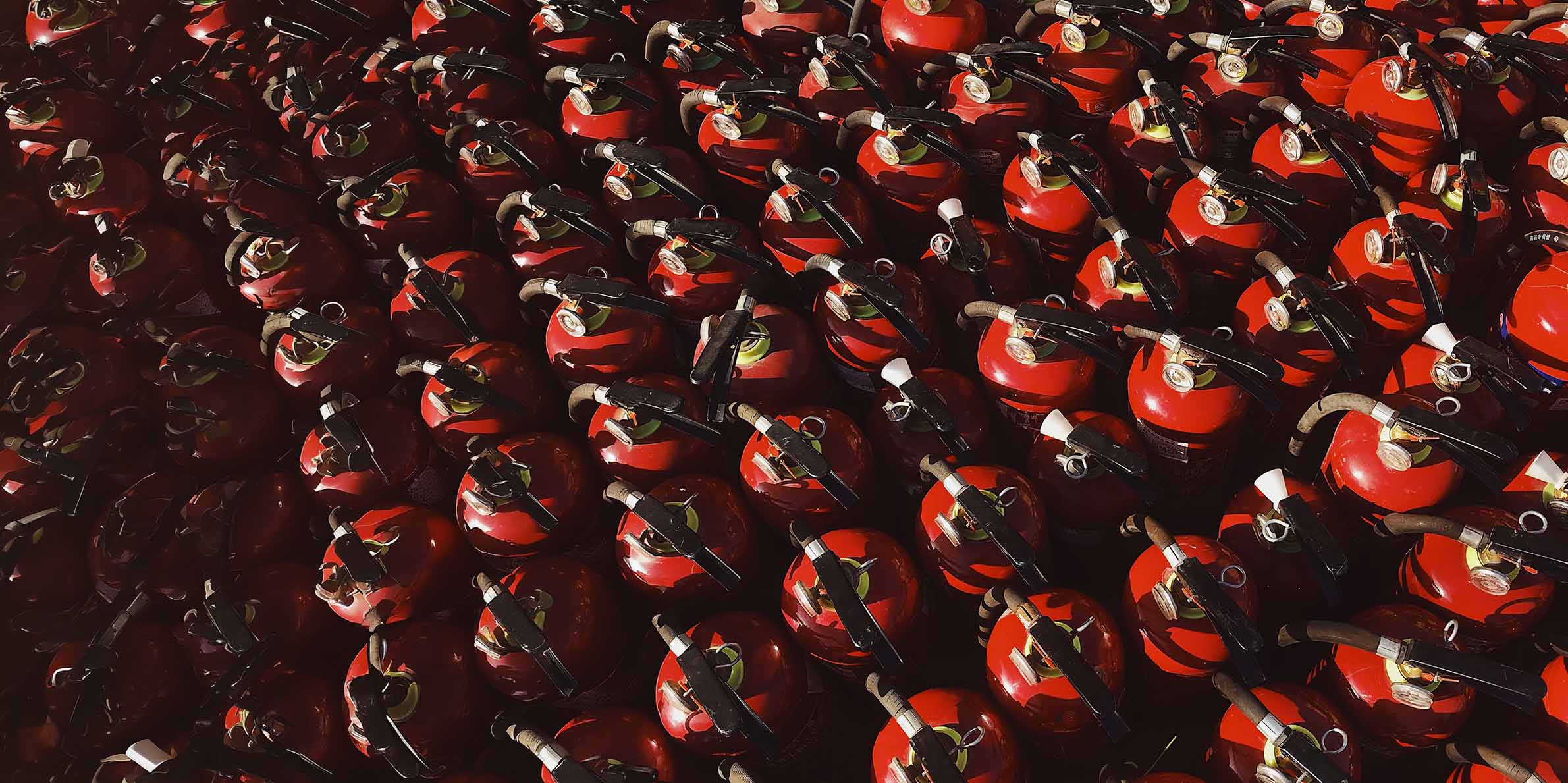
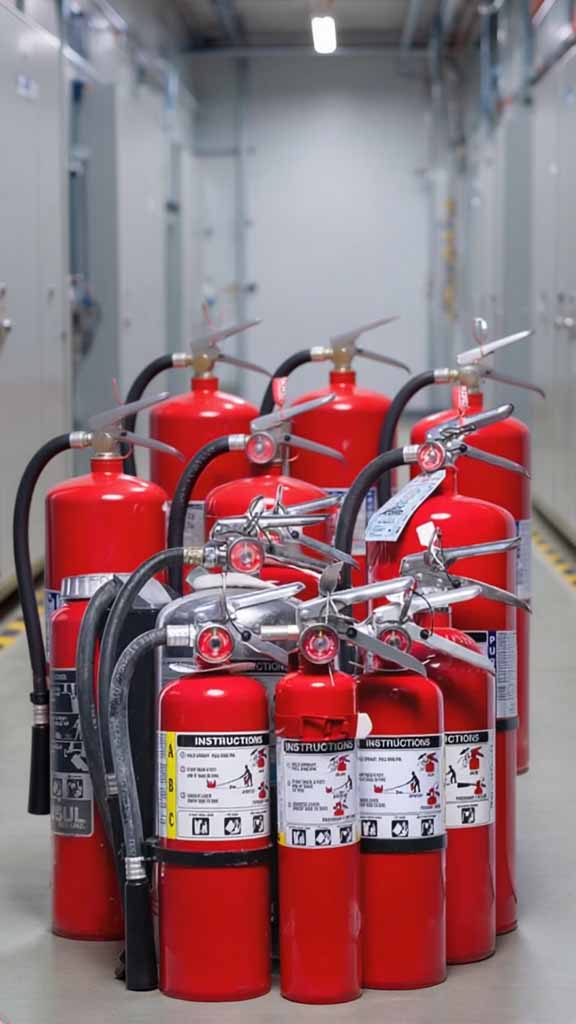
Many red fire extinguishers densely arranged in rows, with black handles and pressure gauges visible on top.

HYDROSTATIC TANK TESTING | Tampa, St. Petersburg, Clearwater, Sarasota, orlando

THE SAME RIGOR WE BRING TO FIRE SAFETY, APPLIED TO EVERY CYLINDER WE TEST.
A pressurized cylinder is only as safe as its last test.
DOT-certified. Fire-marshal-inspected. Trusted with the tanks that can't fail.
Precision tested. Fully documented. Ready under pressure.
REQUEST A FREE ESTIMATE
Failure isn't an option. Not for a fire extinguisher. Not for an SCBA tank. Not for anything holding pressure under someone's trust. That's the standard Piper built its testing program on — the same standard fire marshals hold us to on everything else we do. It doesn't change based on what's inside the cylinder. Scuba tanks. Medical oxygen. Restaurant CO2. Paintball cylinders. Life rafts. Same DOT-certified Water Jacket process, every time — because a cylinder built to hold pressure safely deserves a fire-safety-grade test, whether it's protecting a diver or a building.
Abstract logo with a dark blue water droplet inside a stylized wave shape formed by a dark blue upper curve and a light blue lower curve.
A group of various sizes of red fire extinguishers with visible instruction labels neatly arranged on a hallway floor.
What is hydrostatic tank testing?

Hydrostatic testing is a pressure test that verifies a cylinder can safely hold its rated pressure without failure, required periodically for fire extinguishers, SCBA and SCUBA tanks, and other DOT-regulated pressure vessels. Piper uses the Water Jacket method — the most stringent of the three DOT-recognized testing procedures — measuring how much a cylinder expands under pressure and confirming it returns to its original shape once pressure is released.

For fire extinguishers, this test is required by NFPA 10 every twelve years; other cylinder types follow their own DOT-mandated intervals. Every test is documented, and Piper is DOT-certified to test all cylinder types we service.

As part of the Fortis national network, Piper's hydrostatic tank testing expertise is backed by national training standards and technical resources — giving West Central Florida facilities access to the same level of precision engineering as any major market in the country.

Get a Free Estimate

Who needs fire extinguisher & clean agent services

A CYLINDER UNDER PRESSURE DOESN'T CARE WHAT'S INSIDE IT.
NEITHER DOES OUR TESTING STANDARD.
Hydrostatic testing starts with the cylinders our business is built on: fire extinguishers, required by NFPA 10 every twelve years as part of every complete Piper extinguisher program, and SCBA tanks, tested on DOT 5-year intervals for fire departments and industrial safety teams.

We bring that same fire-safety-grade process to the cylinders that keep other people safe, too: scuba tanks, tested for dive shops throughout Piper's Central and Southwest Florida service area — Tampa Bay to Orlando to Lee County — on a DOT-mandated 5-year cycle; medical oxygen canisters, held to the same rigor as any other life-critical pressure vessel; restaurant CO2 tanks, serving beverage and draft systems across the region; and paintball cylinders and life rafts — smaller cylinders, same non-negotiable standard.

hydrostatic tank CODE & COMPLIANCE
SIMPLE PROCESS. NON-NEGOTIABLE STANDARD.
Hydrostatic testing compliance splits across two separate regulatory frameworks — NFPA for fire safety equipment, DOT for everything else under pressure — and the intervals aren't interchangeable.
A person in a gray shirt holding and reviewing documents in a blue folder, standing next to shelves filled with neatly arranged blue binders.

NFPA 10 — Standard for Portable Fire Extinguishers

requires hydrostatic testing of rechargeable fire extinguisher cylinders every twelve years, with internal examination at the six-year midpoint.

DOT 49 CFR 180.205 and 180.209

govern hydrostatic requalification for SCBA, SCUBA, and CO2 cylinders — generally every five years, with cylinder material (steel, aluminum, or composite) determining the exact interval.
Every test Piper performs is routinely inspected by the state fire marshal, and Piper is DOT-certified to test all cylinder types we service.
Request a Free Estimate

HOW PIPEr's hydrostatic tank testing WORKs

here to help, every step of the way
Every Piper service relationship follows the same standard: thorough assessment, precise execution, clear documentation, and a team that stays accountable long after the work is done.
1

Cylinder Intake

Bring your cylinder to Piper's testing facility, or Piper collects it as part of a scheduled extinguisher or SCBA service visit.

2

Water Jacket Testing

The cylinder is filled with water, lowered into a test reservoir, and pressurized. Displaced water is measured to determine how much the cylinder expands under pressure — a roughly 30-second computerized process.

3

Analysis & Grading

The system compares permanent expansion against temporary expansion to grade the cylinder's safety and confirm it passes DOT requirements.

4

Drying & Return

Cylinders are dried using high-powered steam dryers and returned ready for service, fully documented.

FREQUENTLY ASKED QUESTIONS

FAQs about hydrostatic tank testing
We get asked a lot of questions about our Hydrostatic Tank Testing — here are some of the most common.
How often does a fire extinguisher need hydrostatic testing?
Every twelve years under NFPA 10, with an internal examination required at the six-year midpoint for most rechargeable types.
How often does a scuba or SCBA tank need hydrostatic testing?
Generally every five years under DOT 49 CFR 180, though the exact interval depends on the cylinder's construction material.
What testing method does Piper use?
The Water Jacket method — the most stringent of the three DOT-recognized hydrostatic test procedures.
Can I bring my own tank in for testing, or does it need to be picked up?
Both options are available in our Clearwater location only. Our other three offices do not offer walk-in tank testing.
Does Piper test cylinders that aren't part of a fire protection system?
Yes — scuba tanks, medical oxygen canisters, restaurant CO2 tanks, paintball cylinders, and life rafts, in addition to fire extinguishers and SCBA cylinders.

WHY CHOOSE Piper

THE PIPER DIFFERENCE
Most testing providers treat a cylinder as a cylinder. Piper treats every one — extinguisher, SCBA, scuba tank, or otherwise — like the life-safety equipment it actually is.

As a Fortis company, Piper's suppression programs are backed by national technical standards and resources — delivered by a team that has called West Central Florida home for four decades.
Fire-safety-grade testing, applied to every cylinder.

The same rigor and documentation standard used on life-safety fire equipment carries over to every tank we test.

One trusted testing facility for Central and Southwest Florida.

Dive shops, restaurants, and safety teams throughout Tampa, St. Petersburg, Clearwater, Largo, Sarasota, and now Orlando and the surrounding region rely on Piper.

Service Area

fire extinguisher system coverage

Piper Fire Protection's service area now spans 17 counties across Central and Southwest Florida — including Orlando and the surrounding region — backed by the resources and standards of the Fortis Fire & Safety national network.

‍Part of the Fortis Fire & Safety national network — local expertise, backed by national strength.

‍For national account inquiries, contact our National Accounts team.

‍

Counties served: Marion, Citrus, Hernando, Pasco, Pinellas, Hillsborough, Manatee, Sarasota, Charlotte, Lee, DeSoto, Hardee, Polk, Osceola, Orange, Lake, and Sumter.
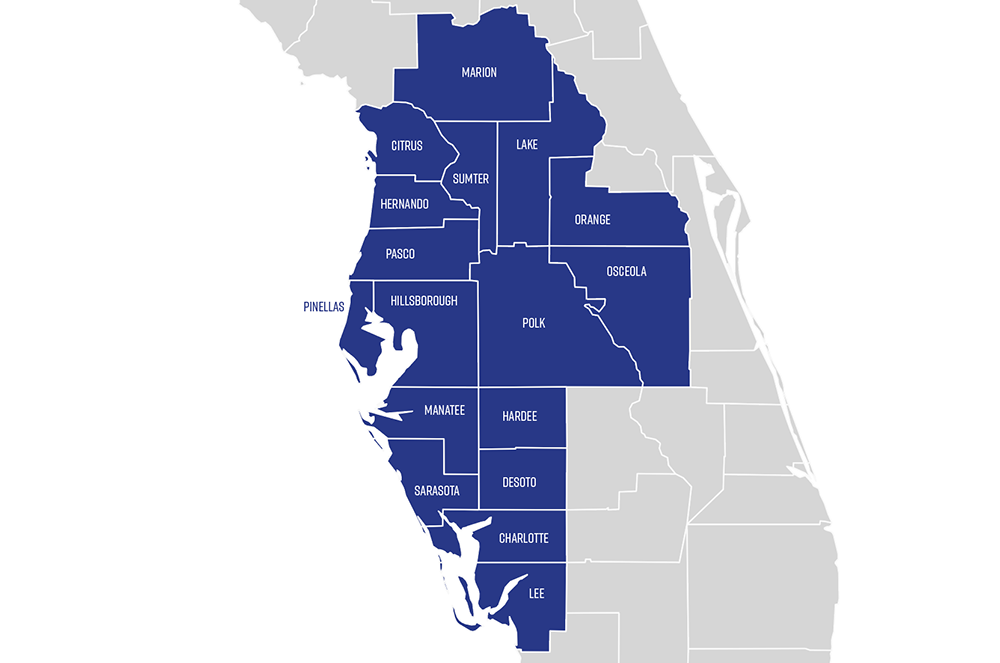
Map highlighting 16 counties in west-central Florida in blue, including Marion, Citrus, Sumter, Hernando, Pasco, Pinellas, Hillsborough, Manatee, Sarasota, Lake, Orange, Osceola, Polk, Hardee, Desoto, Charlotte, and Lee counties.
Keep every cylinder you depend on, pressure-tested and ready.

Talk to Piper about hydrostatic testing for fire extinguishers, SCBA, scuba, or any DOT-regulated cylinder.

Fortis Family of Brands

Local expertise, national strength
The best of both — in every market we serve.

Trust is built locally. It lives in the technician who knows your building, knows your local codes, and shows up when something goes wrong at midnight. It lives in the relationship between a fire protection company and the community it has served for decades.


But capability is built at scale. The training standards, the technical resources, the purchasing power, the shared knowledge of a unified national organization — these are the things that make a local provider exceptional rather than merely adequate.

Fortis was built on this belief.

Our network of regionally rooted fire and life safety companies delivers genuine local expertise in every market we serve — technicians who know the regional AHJs, the local codes, and the specific demands of the facilities in their community. Behind each of them stands the full weight of a premier national organization.

You build. You create. You push the world forward.
‍We protect it all.
CJ Suppression logo with stylized flames above oval containing 'CJS' text, tagged as a Fortis brand.Diversified Systems, Inc. logo with a downward triangle and horizontal line, A Fortis brand.IFSS logo with Integrated Fire and Security Solutions, a Fortis brand text.LSM shield logo with text LifeSafety Management, a Fortis brand on black background.Piper Fire Protection logo with a stylized water droplet and swoosh, labeled a Fortis brand.VFS logo with a triangular symbol above and text Fire & Security Services, A Fortis BrandLAMARCO SYSTEMS logo with text Life Safety & Integrated Security Solutions, a FORTIS brand.