
news & blog
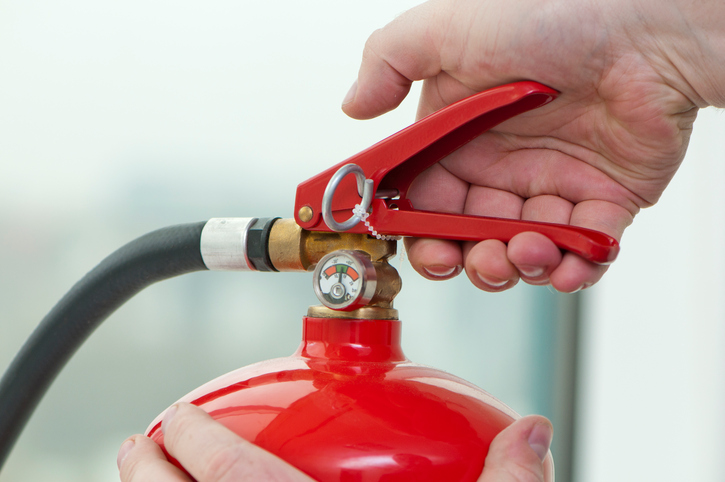
Types of Fire Extinguishers and What They Do
Having the Right Fire Extinguisher Could Save Your Life
Due to the spectrum of materials and chemicals that can catch fire, there are a variety of fire extinguisher types containing distinct agents. Having the right type of extinguisher is crucial to maintaining a safe home or workplace.
Fire Classification
Class A – General flammable materials such as fabric, paper, and lumber.
Class B – Combustible liquids such as motor oil, automotive fuel, and paint.
Class C – Electric current and devices.
Class D – Flammable metal.
Class K – Kitchen flammables, such as grease or fat used in a frying pan or deep fryer.
Fire Extinguisher Types
Below are the most widely available types of devices used to extinguish fires, along with the class of fire on which each should be used.
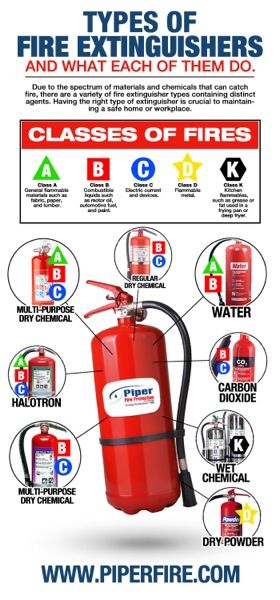
Water
- Class A
- This is the most widely used agent for firefighting. Unfortunately, its extinguishing capabilities are limited to simple fires in which standard combustible materials are burning Foam.
- Classes A, B
- The agents in these fire extinguisher types are effective on both solids and combustible fluids. Anything sprayed with one of these devices must be cleaned thoroughly. Remnants will then evaporate
Multi-Purpose Dry Chemical
- Classes A, B, C
- Mono ammonium phosphate is the agent used in this type of extinguisher. This chemical can damage anything it touches, so it is important to wash away all residue of the agent as soon as possible following its use.
Regular Dry Chemical
- Classes B, C
- This extinguisher uses sodium bicarbonate as its agent. Sodium bicarbonate will not damage your property and is completely safe to use. Cleaning away the chemical is simple, but of course its usability is more limited than the multi-purpose option.
Carbon Dioxide
- Classes B, C
- The agent in this type of extinguisher sucks away the oxygen that is enhancing the flammability of the environment. These extinguishers do not spray as far as others do. It is unnecessary to wash affected areas afterward because the chemical is safe and no traces remain after its usage.
Halotron
- Classes A, B, C
- The agent in this extinguisher is a fluid that vaporizes when released from its container. Like carbon dioxide devices, these extinguishers are green-friendly and will not require cleaning after usage.
Purple K Dry Chemical
- Classes B, C
- This type of fire extinguisher uses the agent potassium bicarbonate. The chemical will not damage belongings or the surrounding atmosphere. It does, however, need to be swept up or flushed away after the device is used.
Wet Chemical
- Class K
- The agent used in this type of fire extinguisher is a complex agent with the compound potassium acetate as its basis. It mists any inflamed cooking fluids and fats, also affecting any gases that are being released by the fire.
Dry Powder
- Class D
- There are a range of dry powder devices. If your atmosphere contains metals that can catch fire, be sure you are using an extinguisher specific for the metal in your environment.
Be sure to check your fire extinguisher to ensure it meets your needs and maintain it properly. It could save your life.
And if you’re in need for fire protection services, contact Piper Fire today. We offer a wide range of services for families and businesses that meet your needs and ensure your safety and protection.
Fortis Family of Brands
Trust is built locally. It lives in the technician who knows your building, knows your local codes, and shows up when something goes wrong at midnight. It lives in the relationship between a fire protection company and the community it has served for decades.
But capability is built at scale. The training standards, the technical resources, the purchasing power, the shared knowledge of a unified national organization — these are the things that make a local provider exceptional rather than merely adequate.
Fortis was built on this belief.
Our network of regionally rooted fire and life safety companies delivers genuine local expertise in every market we serve — technicians who know the regional AHJs, the local codes, and the specific demands of the facilities in their community. Behind each of them stands the full weight of a premier national organization.
You build. You create. You push the world forward.
We protect it all.